
For men who are tired of frequent shaving, painful waxing, ingrown hairs or persistent irritation, intimate laser hair reduction can offer a practical longer-term option. But what is Brazilian laser hair removal for men? It is a tailored laser treatment that reduces hair across the pubic and intimate area, with the precise treatment zone agreed privately during consultation.
The word Brazilian can mean slightly different things depending on the clinic and the individual. Some men want hair reduction from the pubic region and groin only; others include the scrotum, penile shaft, perineum and between the buttocks. The right approach is not assumed. It is discussed clearly before treatment, with your comfort, skin type, hair growth and preferred outcome all taken into account.
What Does a Male Brazilian Laser Treatment Include?
Brazilian laser hair removal for men is designed for the intimate area, rather than simply the visible hairline above the underwear. A full Brazilian commonly treats the pubic mound, groin and crease, scrotum, shaft, perineum and perianal area. However, treatment boundaries should always be personalised.
You may prefer a more natural, groomed result rather than complete removal. For example, the pubic area can be reduced and shaped while hair in other areas is treated more fully. Others choose to combine a Brazilian with laser treatment for the buttocks, lower abdomen or inner thighs where hair growth and friction can be a concern.
This is one reason a proper consultation matters. A clinician should establish exactly which areas you want treated, explain what is clinically appropriate, and create a plan that protects your privacy while keeping the process straightforward.
How Laser Hair Removal Works
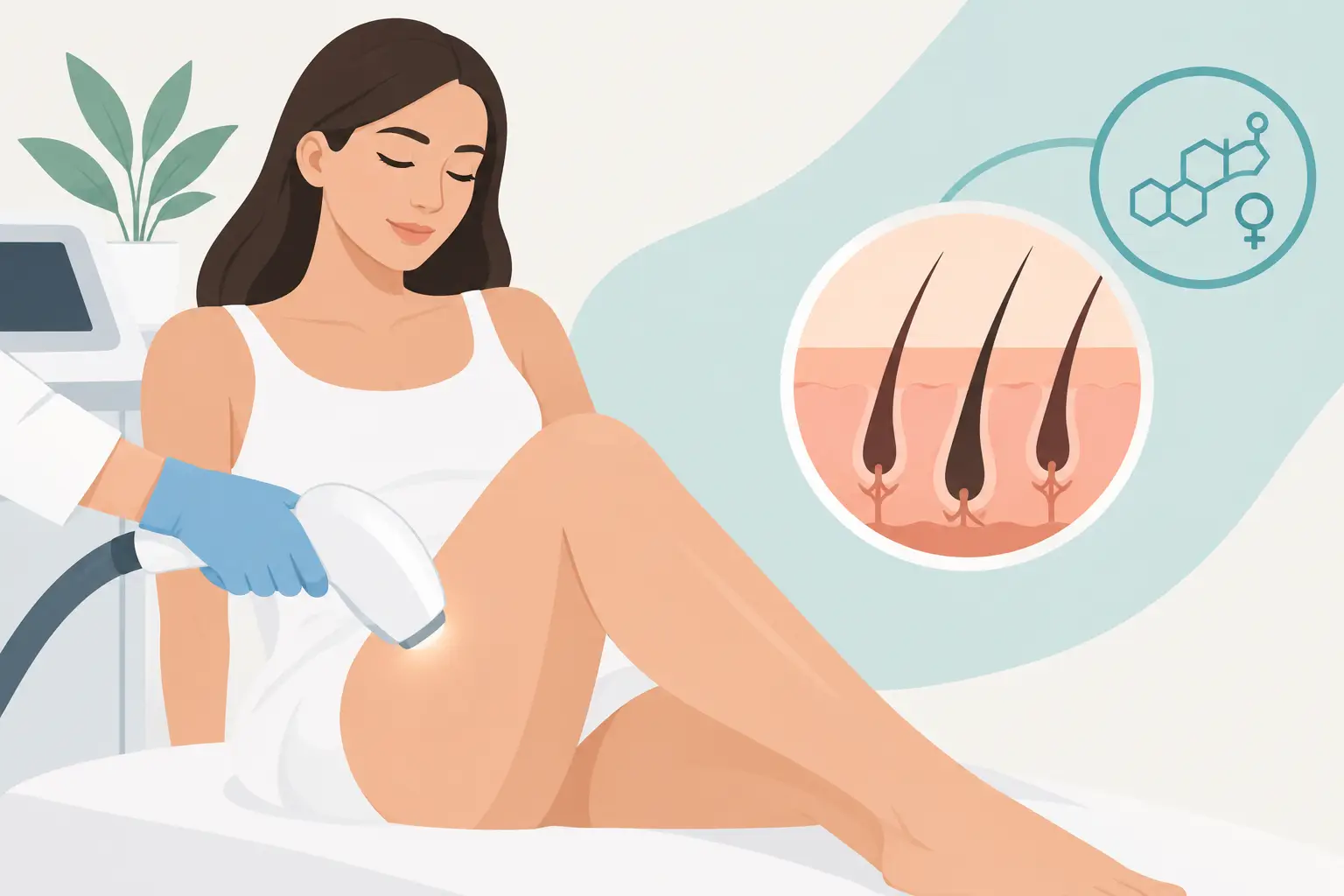
Laser hair removal uses controlled light energy that is absorbed by melanin, the pigment in the hair. The energy travels down the hair shaft towards the follicle, heating it and disrupting its ability to produce new hair effectively.
The laser is most effective when hairs are in their active growth phase. Not every hair is in that phase at the same time, which is why a course of appointments is needed. Sessions are usually spaced several weeks apart to target new groups of active hairs as they emerge.
The goal is long-term hair reduction, not a promise that every hair will disappear permanently after one course. Many clients experience a substantial reduction in the amount, density and coarseness of hair. Any regrowth is often finer and easier to manage, although occasional maintenance sessions may be beneficial over time.
Is It Suitable for Every Hair and Skin Type?
Suitability depends on the contrast between your skin tone and hair colour, as well as the laser technology being used. Dark, coarse hair often responds particularly well because it contains more pigment for the laser to target. Very fair, grey, red or blonde hair may be less responsive.
A detailed consultation and patch test are essential. Your practitioner will assess your skin, hair and medical history, discuss any medication or recent sun exposure, and select safe treatment settings. This individual assessment is particularly important for intimate areas, where the skin can be sensitive and different zones may require different settings.
What Happens During an Appointment?
Discretion and clear communication should shape the entire experience. Before your first full session, your practitioner will confirm the agreed treatment area, check for changes in your health or skin, and ensure the area is suitably prepared. You will be given appropriate privacy throughout.
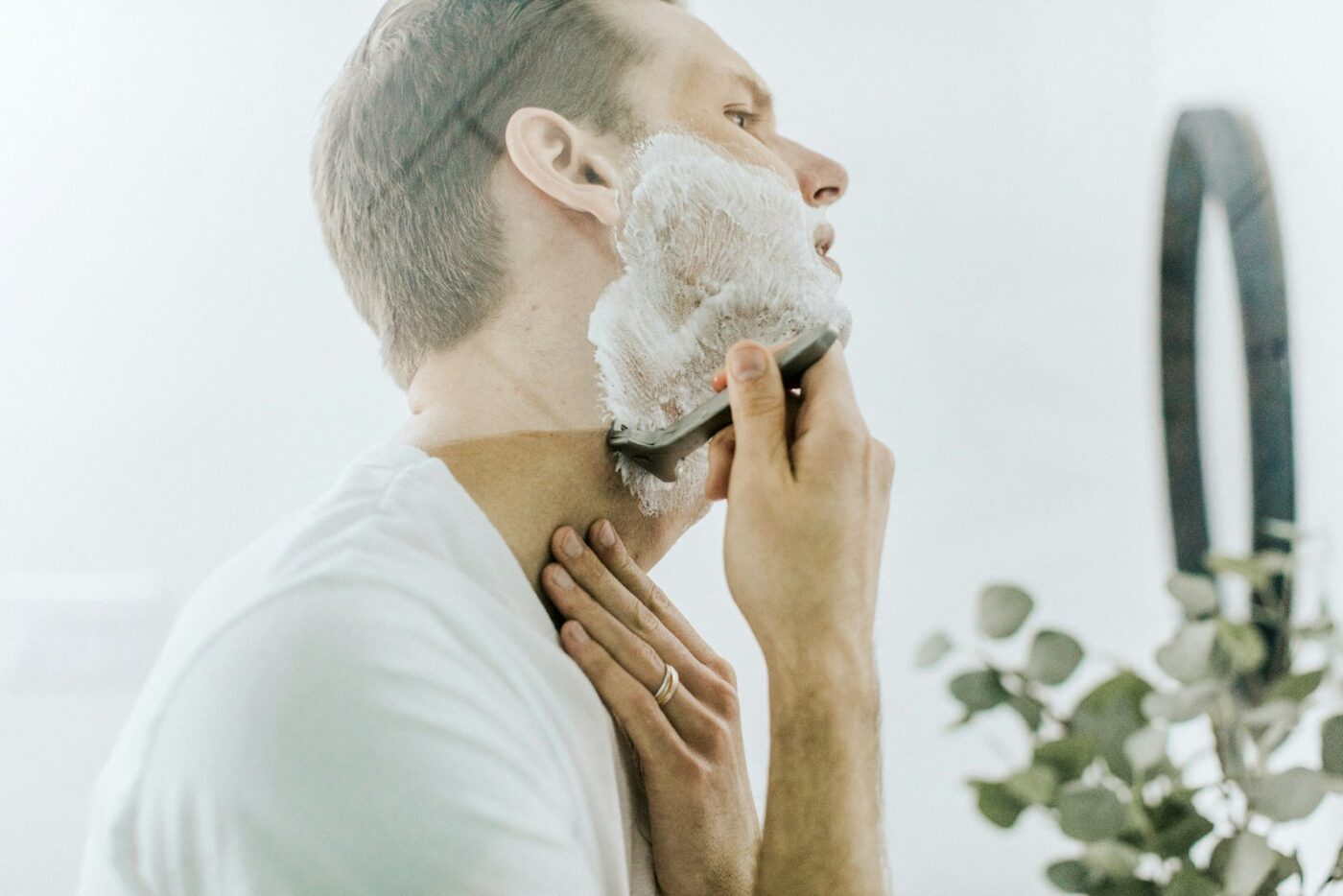
The hair should usually be shaved shortly before treatment, leaving the follicle beneath the skin available for the laser to target. Waxing, plucking and epilating should be avoided beforehand because they remove the hair root. Your practitioner will advise on the exact preparation timetable for your treatment plan.
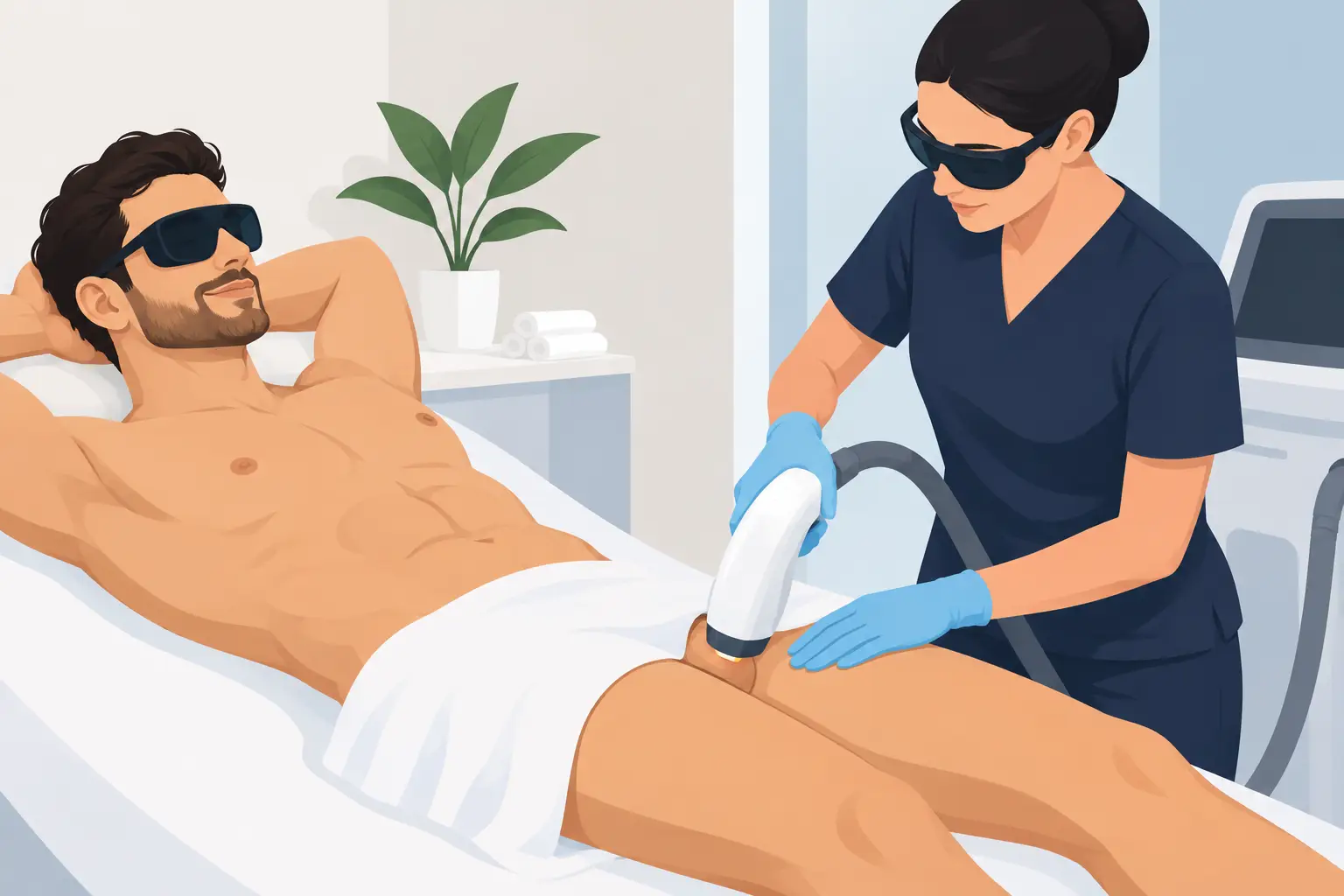
During the session, protective eyewear is worn. The sensation is commonly described as a brief warm prick or the flick of an elastic band against the skin. Intimate areas can feel more sensitive than the legs or chest, but treatment is generally quick and settings can be adjusted where appropriate. A cooling method may be used to improve comfort and protect the skin.
A Brazilian appointment length varies according to the areas included and the amount of hair present. The first appointment may take a little longer, as it includes careful mapping and confirming your treatment boundaries.
How Many Sessions Will You Need?
Most men need a course of sessions to achieve worthwhile reduction. The exact number varies, but six to eight treatments is a common starting point. Hormones, genetics, hair density, hair colour and adherence to the recommended appointment schedule all influence progress.
It is normal to see uneven shedding and patchy regrowth between early sessions. This does not mean treatment is failing. Hair growth cycles mean the response develops gradually across the course. Consistency gives the laser the best opportunity to treat each area at the right stage of growth.
Your practitioner should review how your skin and hair are responding throughout. If needed, the treatment plan can be adjusted rather than treating every appointment as identical.
Preparation and Aftercare for Intimate Laser Treatment
Good preparation reduces avoidable skin sensitivity. Avoid tanning, sunbeds and self-tan before treatment, as increased pigment in the skin can affect safety and suitable laser settings. Arrive with clean skin free from fragranced creams, oils or deodorants in the treatment area.
After your appointment, temporary redness, warmth or mild follicular swelling can occur. This is often short-lived and can indicate that the follicles have responded to treatment. Loose clothing, cool compresses and fragrance-free soothing products can help if recommended by your practitioner.
For the first day or two, it is sensible to avoid heat and friction. That can include hot baths, saunas, strenuous exercise, tight underwear and sexual activity if the skin feels tender. Do not pick at the treated area or exfoliate until the skin has settled. As with any laser procedure, following your individual aftercare advice is part of achieving a comfortable recovery.
Why Choose a Clinical Setting?
Intimate laser hair removal is personal treatment, and it deserves more than a rushed appointment or a generic package. The treatment area is sensitive, the skin can vary significantly across it, and you need to feel able to discuss your preferences without embarrassment.
At a nurse-led, CQC-registered clinic such as Defyne Aesthetics Skin & Laser Clinic, treatment planning begins with suitability and safety. This means reviewing relevant health information, carrying out a patch test, setting realistic expectations and providing aftercare support alongside the treatment itself.
Price alone should not determine where you receive laser treatment. Ask what technology is being used, whether a consultation and patch test are included, who will carry out the procedure, and how the clinic manages adverse reactions or concerns. Clear answers are a sign of professional care.
Common Questions About Brazilian Laser Hair Removal for Men
Is male Brazilian laser hair removal embarrassing?
It is understandable to feel self-conscious before a first appointment. Experienced practitioners approach intimate treatment professionally and matter-of-factly. The area to be treated is agreed in advance, privacy is maintained, and you remain in control of your treatment boundaries.
Does Brazilian laser hair removal hurt?
Comfort levels vary by individual and by area. The scrotum and perineum can be more sensitive than the pubic mound, but treatment is usually well tolerated. A patch test gives you a useful indication of the sensation and allows the practitioner to plan suitable settings.
Can I shave between sessions?
Yes. Shaving is generally the preferred way to manage regrowth between appointments. Avoid waxing, threading, plucking or epilating, as these methods remove the hair from the follicle that the laser needs to target.
A well-planned course of intimate laser hair removal can make daily grooming simpler and help reduce the cycle of shaving irritation and ingrown hairs. The most useful next step is a private consultation where you can define the result you want, understand whether laser treatment is suitable for you, and proceed at a pace that feels comfortable.